

A hospital appointment alone doesn’t guarantee NHS-funded transport. For hospital transport in Farnborough, people attending an appointment may be eligible for the Non-Emergency Patient Transport Service (NEPTS) or the Healthcare Travel Costs Scheme (HTCS). NHS-funded patient transport isn’t for urgent journeys or 999 emergencies.
It can be difficult to tell which route applies, particularly when health or mobility needs affect how you travel. The schemes serve different needs: one concerns patient transport, while the other may help with eligible healthcare travel costs. This guide explains what non-emergency transport involves, how medical and mobility criteria are considered, and how regular hospital journeys and service areas fit into the decision. If you’re a first-time patient in Hampshire, call 0300 123 9833 to create a master record and book your initial patient transport appointment. You’ll also learn how the travel-cost options differ, so you can understand the next step and plan your journey with clearer expectations.
Key Takeaways
- Understand how NHS patient transport differs from help with eligible healthcare travel costs, and which route may suit your journey.
- Learn how the frequency and duration of sustained treatment can affect consideration for regular hospital transport.
- See how medical and mobility needs, including the need for an escort, relate to transport eligibility.
- Find out how service area and journey arrangements shape your options for getting to hospital appointments.
What is Non-emergency Patient Transport?
Non-Emergency Patient Transport Service (NEPTS) is NHS-funded transport for eligible patients attending healthcare appointments. It is not an urgent response service, and it does not replace calling 999 in an emergency. Eligibility depends on whether a person’s medical or mobility needs make ordinary travel unsuitable. An appointment alone does not establish eligibility. Patients may also qualify for the Healthcare Travel Costs Scheme (HTCS), which helps with eligible travel costs rather than arranging transport.
First-time patients in Hampshire must call 0300 123 9833 to create a master record and book their initial transport appointment. The Hampshire patient transport contact centre is open from 06:30am until 23:00pm, 7 days a week. Keep appointment details ready when arranging or discussing a journey. If cancelling, use the cancellation contact method provided with the booking and share the relevant journey details. This helps direct the cancellation to the correct appointment; don’t assume a separate cancellation number.
Patient Zone is an online route for booking and managing patient transport journeys. Use the booking details to review the journey and make relevant arrangements through the service. For patients providing a mobile number for Thames Valley transport, a text reminder arrives 24 hours before the journey. Thames Valley eligible patients are usually picked up within the two-hour window before their appointment. The service launched on April 1st, 2025. Coverage depends on whether the journey falls within the service area; the service name alone does not establish that every Farnborough journey is covered.
Patients who aren’t eligible for NEPTS may need to arrange another way to travel. The Healthcare Travel Costs Scheme (HTCS) may help with reasonable travel costs for patients referred to an NHS hospital or other NHS premises for specialist treatment or diagnostic tests. Eligible patients may be able to claim a refund. This is help with costs, not a transport booking. Check which scheme applies before arranging travel, and keep referral and appointment details to hand.
Frequent hospital journeys for sustained treatment
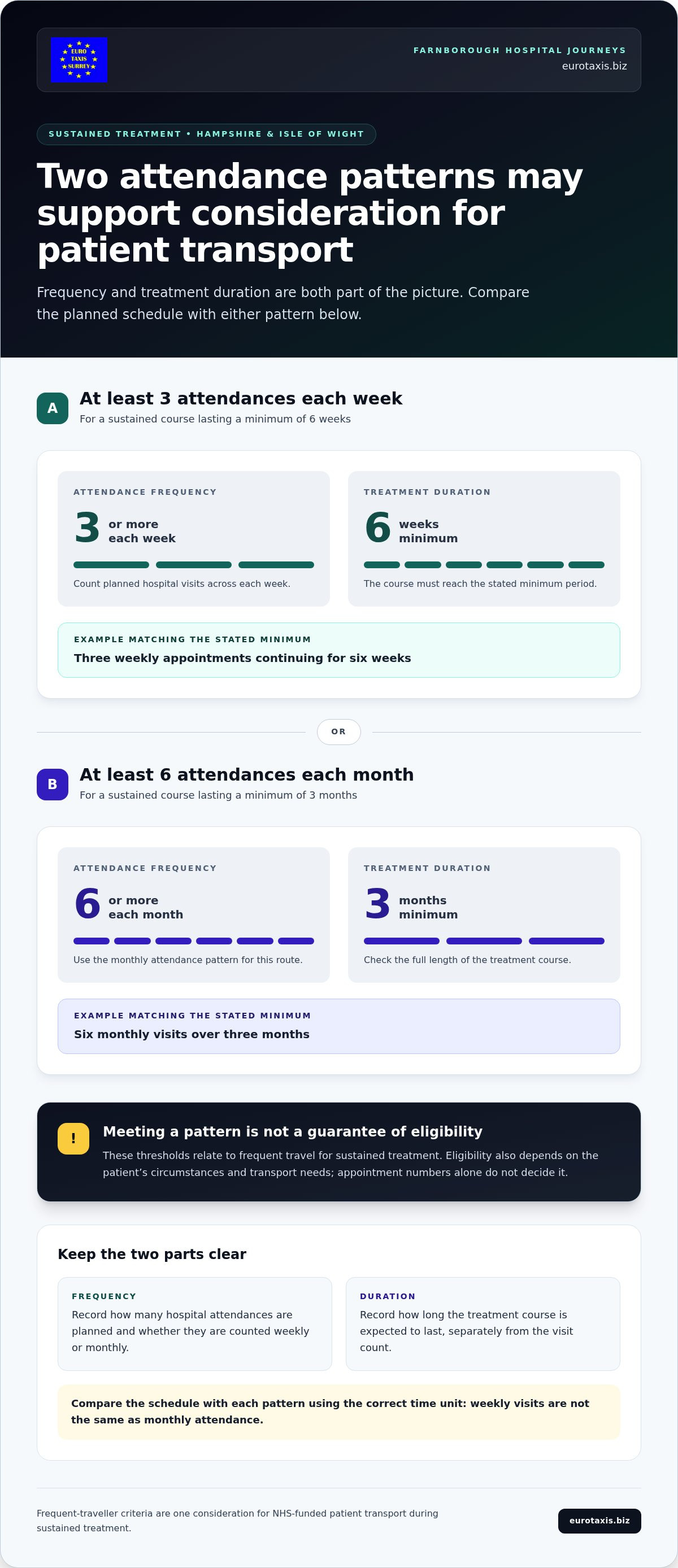
Frequent-traveller criteria are attendance thresholds that may make a patient eligible for NHS-funded transport during sustained treatment. In Hampshire and the Isle of Wight, two attendance patterns may be relevant. Meeting either pattern may support consideration, but both the appointment frequency and treatment period matter.
The first pattern is hospital attendance at least 3 times a week for a sustained course of treatment lasting a minimum of 6 weeks. Count the planned hospital visits across each week, then consider whether the course reaches the stated duration. For example, a schedule of three weekly appointments continuing for six weeks matches the frequency and minimum period described. A shorter course or fewer weekly visits does not meet that particular pattern.
The second pattern is attendance at least 6 times a month for a sustained course lasting a minimum of 3 months. This provides a separate route for treatment schedules that are less frequent each week but continue over a longer period. Compare the monthly appointment pattern and the full course length with both parts of the threshold. Six monthly visits over three months illustrate the stated minimum; the count alone does not describe the required duration.
Use the treatment schedule as a starting point. Note the number of hospital attendances, how often they occur and how long the course is expected to last. Then compare those details with each Hampshire and Isle of Wight pattern. The thresholds use different units, so don’t confuse weekly visits with monthly attendance. Record treatment duration separately from appointment frequency.
These criteria concern frequent travel for sustained treatment, not simply having several appointments. If you’re attending hospital near Farnborough, group visits by week or month and record the treatment period. This makes it easier to see which threshold may apply and explain the pattern when arranging patient transport. Eligibility also depends on the patient’s circumstances and transport needs, not appointment numbers alone.
Medical and mobility criteria
Medical and mobility criteria are the needs considered when deciding whether NHS-funded patient transport is appropriate. The key question is whether a person can travel to an appointment safely using ordinary transport, given their health or mobility needs. An appointment by itself does not establish eligibility. NHS-funded transport is for non-emergency journeys, not urgent responses or 999 emergencies. For a planned hospital visit, describe the practical effect of the condition on the journey, rather than relying only on a diagnosis name.
Wheelchair-accessible transport is available in Farnborough for hospital journeys. It can make travel more manageable for someone who cannot use a standard passenger seat, but wheelchair access alone does not establish eligibility for NHS-funded transport. These are separate questions: whether an accessible vehicle can meet the travel need, and whether the patient meets the criteria for NHS-funded transport. When planning a trip, note the mobility support required and the appointment destination.
An escort is a person who travels with the patient to provide support during the journey. In the Thames Valley service, patients younger than 16 years must have an escort travel with them. This rule is specific to that service. For a child’s appointment, include the escort in the travel plan and consider how the child’s needs affect getting to and from the hospital. The escort requirement does not mean that every adult patient needs someone accompanying them.
Before arranging transport, note the details that explain what the patient needs for the journey. For example, record whether they use a wheelchair, need help moving between home and the vehicle, or find ordinary travel unsuitable because of their condition. These details describe practical needs; they are not a separate eligibility checklist. Include the appointment location and, for a child, any escort travelling with them. Clear information helps distinguish mobility requirements from the NHS decision about funded transport.
Transport provider and service area
Hospital transport in Farnborough may be NHS-funded for eligible patients or arranged separately as a non-emergency journey. The right route depends on eligibility, the destination and whether the service covers the patient’s home area.
A service area is the geographic area covered by a transport service. Farnborough is in Hampshire, but the hospital’s location alone does not determine which service applies. Before arranging travel, note the patient’s home postcode and the hospital or clinic address. Match both ends of the journey to the relevant service area, particularly when treatment is outside the patient’s immediate neighbourhood.
Hampshire and Thames Valley are distinct service names, so don’t assume that a nearby hospital follows the same arrangements. If travelling from Farnborough to an appointment elsewhere, consider the home address, destination and applicable patient transport route together. The service area is not simply the distance between the two places. Establish which service handles the planned journey to avoid complications with the arrangements.
For NHS-funded transport, eligibility and geographic coverage are separate considerations. A patient may meet medical or mobility criteria, but the journey must also fall within the relevant service area. Being within that area does not by itself make someone eligible. Keep the appointment details and both addresses together when arranging travel. If the NHS route does not suit the journey, consider separately arranged non-emergency transport or another suitable option.
Farnborough patients can organise their next step by noting the appointment site, home postcode and transport needs. Those details help distinguish an NHS booking from a journey arranged independently. They also clarify whether the journey involves one hospital or a different treatment location. For a separately arranged journey, plan a hospital journey with the key addresses and appointment information ready.
Euro Taxis: Account Work
Euro Taxis provides hospital and medical runs for people arranging non-emergency journeys to hospital or clinical appointments. If you need to arrange transport independently, this is a practical option alongside NHS-funded transport, which has separate eligibility criteria.
For organisations coordinating regular journeys, Euro Taxis’ account work can help organise transport arrangements. Business travel is also available for work-related journeys, while companies seeking dedicated vehicle leasing and fleet solutions can look to providers like Fleetsauce. When booking, share the destination and any relevant travel needs so the journey can be planned clearly.
Euro Taxis is not an ambulance or emergency medical service. For urgent medical help, use the appropriate emergency route rather than arranging a taxi journey. For a non-emergency booking or account enquiry, visit eurotaxis.biz to contact Euro Taxis.
Make your next journey easier to plan
Once you know which transport route suits your circumstances, gather the practical details needed to organise the journey. Keep the appointment address, collection point and access requirements together so you can explain the trip clearly. This preparation can make planning hospital transport in Farnborough more straightforward.
For journeys arranged independently, Euro Taxis offers hospital and medical runs, account work and airport transfers. These provide options for medical travel, organised account journeys and airport trips, depending on your needs. NHS-funded transport is separate and has its own eligibility criteria.
For a calm next step, contact Euro Taxis about your journey and share the details that matter. A clear plan can make the arrangements feel more manageable, so you can approach your upcoming travel with greater confidence.
Frequently Asked Questions
Am I eligible for the service?
You may qualify for NHS-funded patient transport if your health or mobility needs make ordinary travel unsuitable. Appointment attendance alone does not establish eligibility. For sustained treatment in Hampshire and the Isle of Wight, frequent-attendance thresholds may also be relevant. When considering your situation, explain how your condition affects the journey, including getting to a vehicle or travelling safely.
Can I bring someone to travel with me?
In the Thames Valley service, a patient younger than 16 years must travel with an escort. For an adult, don’t assume that an escort is automatically included in NHS-funded transport arrangements. Explain the passenger’s support needs when planning the journey. For example, note whether someone needs to accompany a child or help the patient manage the trip to the appointment.
How can I get further information?
For Hampshire patient transport, call 0300 123 9833 if you’re a first-time patient arranging an initial booking. For general information about help with healthcare travel costs across the UK, call the national health costs advice line on 0300 330 1343. Have your appointment or referral details ready, so you can explain which journey or travel-cost question you’re asking about.
How do I book my transport?
For a first NHS-funded patient transport booking in Hampshire, call 0300 123 9833 to create your master record and arrange the initial appointment journey. In Thames Valley, use Patient Zone to book and manage transport online. Before starting, gather the hospital address and appointment information. These details help you select the correct journey and enter the booking accurately.
What happens after I have booked my transport?
After a Thames Valley booking, patients who provide a mobile number receive a text reminder 24 hours before the journey. Eligible patients are usually picked up within the two-hour window before their appointment. Keep your phone accessible and review the journey information against your appointment details. If anything has changed, use the contact route provided with your booking.
What if the transport doesn't arrive on time?
If your booked transport hasn’t arrived as expected, use the contact details provided with your booking to report the delay. Give your name, appointment destination and booking information, and explain where you’re waiting. If you booked through Hampshire’s patient transport contact centre, its operating hours are 06:30am until 23:00pm, 7 days a week. Keep the hospital appointment details nearby.


