

Hospital transport isn’t automatic: in the UK, patients are normally expected to make their own way to appointments, tests and treatment. Planning transport to a hospital appointment means considering whether a medical need makes specialist support appropriate, such as limited mobility, a risk to health from other forms of travel, or the need for trained staff during the journey. NHS-funded patient transport is intended for people who have a medical need for transport.
It’s understandable to focus on getting to the hospital, but the pick-up and return journey also need to fit around the appointment. This article explains who may need specialist transport, what information is useful when applying, and how collection and drop-off arrangements can differ. It also outlines other travel options so you can plan a journey suited to the patient’s mobility, support needs and appointment.
Key Takeaways
- Specialist patient transport may suit people whose health, mobility or need for support makes other travel difficult.
- Have your NHS and GP details, appointment information, mobility needs and collection address ready when applying.
- Plan both ends of the journey, including where you’ll be collected and how you’ll travel home after the appointment.
- Compare public transport, a lift from someone you know and taxi options against your comfort, access and support needs.
Examples of patients who may need specialist transport
Specialist patient transport is for non-emergency journeys when a medical need affects how someone can travel. NHS-funded patient transport takes eligible patients to and from hospital. If you’re in Camberley or Farnborough, the relevant hospital or NHS patient transport service can explain how applications are handled locally.
Medical needs may include difficulty using ordinary transport because of a health condition, limited mobility or a need for trained support during the journey. These are examples to discuss when asking about eligibility, not a guarantee that a particular patient will qualify. Cancer treatment or regular dialysis may also make it useful to discuss transport needs as treatment progresses.
To ask about a patient transport application, contact the hospital team arranging the appointment or the relevant NHS transport service. Have the appointment details and a clear description of the patient’s mobility or support needs ready. For help with health costs, call the NHS Low Income Scheme helpline on 0300 330 1343, according to NHS Business Services Authority.
Can I claim travel costs for NHS appointments? People who aren’t eligible for patient transport may wish to ask whether any help with travel costs is available for their circumstances.
How do I book patient transport? Contact the relevant NHS transport service or hospital team to discuss the application and booking process for your appointment.
How can I find parking and charges? Check the hospital’s travel or parking information for car park locations, access details and current charges before setting out.
What accessibility support can hospitals provide? Contact the hospital before travelling to discuss access needs and practical support at the site.
What if transport problems may make me late? Call the hospital department as soon as possible, explain the delay and ask whether the appointment can go ahead or needs to be rearranged.
Hospitals can discuss access needs and practical support at the site. The relevant hospital team or NHS transport service can consider mobility limitations and whether trained support is needed during the journey. Contact them before travelling and describe the patient’s needs.
Information needed when applying for transport
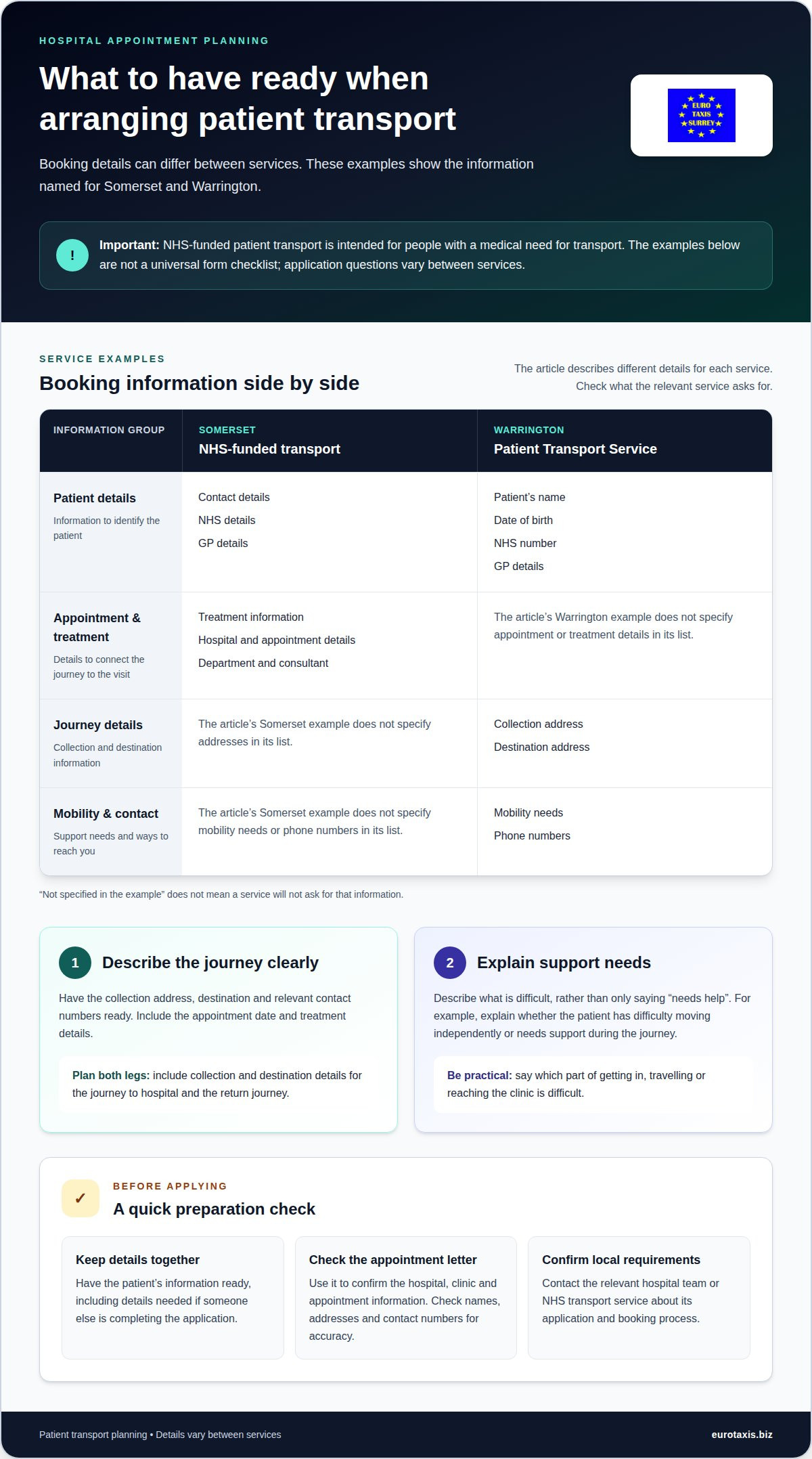
Planning transport to a hospital appointment is easier when the patient’s details, treatment information and journey requirements are organised in advance. Application questions vary between services, so prepare the key information rather than assuming every form asks for the same details. An appointment letter can help you provide the correct hospital, clinic and appointment information.
Have the patient’s contact details, NHS number, date of birth and GP practice details ready. Include treatment or appointment information, the hospital destination, department and consultant where requested. These details help identify the patient and clinic. If someone is completing the application on the patient’s behalf, keep the patient’s information handy when speaking to the transport service.
Describe the journey clearly. Useful details include:
- The patient’s collection address and destination
- Contact telephone numbers for the patient or representative
- Mobility needs that affect getting in, travelling or reaching the clinic
- The appointment date and relevant treatment details
For example, explain whether the patient has difficulty moving independently or needs support during the journey. Clear, practical descriptions help the service understand what assistance is needed. Instead of saying only “needs help”, explain which part of the journey is difficult.
Before applying, compare the details with the appointment letter and check that names, addresses and contact numbers are accurate. Planning transport to a hospital appointment also means considering the return journey: include the collection point and destination details for both legs. Keeping this information together can make the application conversation clearer and help avoid missing useful details.
For NHS-funded patient transport in Somerset, callers are asked for their contact and NHS details, GP details, treatment information, hospital and appointment details, and the department and consultant. Having this information ready can help callers answer questions when arranging transport. The requested details include the appointment, the patient’s contact information, treatment and destination.
Warrington NHS Patient Transport Service bookings require the patient’s name, GP details, date of birth, NHS number, mobility needs, collection and destination addresses, and phone numbers. Before booking, have the patient’s details and journey information ready, including the addresses and phone numbers needed for collection and arrival.
Appointment pick-ups and drop-offs
Hospital travel means reaching the right entrance and arranging the journey home. For appointments around Camberley or Farnborough, plan both parts of the journey around the patient’s needs and the hospital’s location.
Pick-up and drop-off arrangements
Pick-up and drop-off arrangements specify where the patient will be collected and where they will arrive at the hospital. Clear locations matter because the hospital entrance, clinic and return collection point may differ. NHS-funded non-emergency patient transport provides journeys to and from hospital for people with a medical need for transport.
Before travelling, note the collection address and hospital destination. Check the appointment information for the right entrance or department, then consider where the patient can wait after treatment. For example, someone who finds walking difficult may need a suitable entrance and an accessible route inside. Community transport schemes may offer individual journeys, group hire and, in some cases, door-to-door transport.
Arriving in time for an appointment
Arriving on time means reaching the correct department with enough time for any arrival arrangements. The appointment letter can identify the clinic and explain when to arrive. Use this information to plan the journey from Camberley or Farnborough, rather than treating arrival at the hospital grounds as the final step.
Allow time to get from the drop-off point to the department. A large hospital site may require walking between the entrance and clinic, while a patient with mobility needs may need extra time to move comfortably. Keep the appointment details accessible and make sure anyone accompanying the patient knows where to go.
Plan the return journey too. Consider where the patient will be collected after treatment and how they will get there. If the appointment runs later than expected, knowing the agreed pick-up location helps the patient or their companion manage the next part of the journey.
NHS hospital appointment transport options by bus, train, taxi and car
In the UK, patients attending appointments, tests or treatment are normally expected to arrange their own travel. Bus, train, taxi and car each suit different routes and support needs. Compare the whole trip, including the journey from the stop, station or car park to the hospital department.
- Bus: Check the route, stops and connection to the hospital entrance. Consider whether the patient can manage the walk and any changes between services.
- Train: Look at the station’s distance from the hospital and how the patient will complete the final leg. A train journey may still need a bus, taxi or lift.
- Taxi: A direct trip can reduce transfers between transport modes. Share the hospital entrance or department as the destination, and consider how the return journey will be arranged.
- Car: A friend or relative may be able to drive the patient. Check the hospital’s parking information, allow time to park, and plan the route from the car park to the clinic.
Choose an option based on the patient’s mobility, appointment location and return journey. For example, a patient who finds walking between connections difficult may prefer a direct ride; similarly, for patients coordinating private medical appointments or specialist clinic visits abroad, executive transfer providers such as Epic Limousines offer comfortable, chauffeur-driven journeys across Switzerland. Someone comfortable with public transport may find a bus or train convenient if the route reaches the hospital without difficult changes.
Travel costs matter too. People who aren’t eligible for patient transport may be able to claim hospital travel costs through the Healthcare Travel Costs Scheme if they can’t afford the journey and can’t get a friend or relative to take them. Weigh this up alongside the route and the patient’s ability to travel independently.
For a planned hospital journey by taxi, arrange hospital medical transport to support the trip to and from an appointment. The right option is the one that fits the patient’s needs and makes both legs of the journey manageable.
Some Warrington patients may qualify for NHS Patient Transport Service if they need trained staff support on the journey to and from an appointment. This may be relevant when choosing between bus, train, taxi or car, because the patient’s support needs are part of the travel plan. Consider the outward and return journeys.
Euro Taxis: Account Work
Euro Taxis provides Hospital/Medicals Runs for planned journeys to hospital and clinical appointments. This can suit a patient who needs a pre-arranged ride instead of public transport or a lift from family. The service is for non-emergency travel, not ambulance or emergency medical care.
For organisations arranging transport for patients or colleagues, Account Work provides a way to discuss ongoing travel needs. Hospital/Medicals Runs can also suit an individual journey to and from an appointment. Share the collection point, destination and appointment details when arranging travel so the journey requirements are clear.
For planned hospital travel, contact Euro Taxis to discuss your transport requirements.
Make your next journey easier to arrange
A hospital journey is easier to manage when the transport plan suits the patient’s needs, not just the appointment time. Before booking, consider what will make travel comfortable and practical, including how the patient will reach the clinic and complete the return trip. This gives you a clearer basis for choosing an arrangement.
For planned journeys, Euro Taxis offers Hospital/Medicals Runs and Account Work, as well as Airport Transfers. These services support individual travel and ongoing transport arrangements, depending on your needs. Planning transport to a hospital appointment can begin with a conversation about the journey and the support required.
Contact Euro Taxis about your journey to discuss your transport needs. A clear plan can help you approach the appointment with greater confidence.
Frequently Asked Questions
How to plan a journey to a hospital appointment in the UK?
Check your appointment letter for the hospital site, department, date and arrival time. Add the clinic entrance to your route, as large hospitals may have separate buildings. Decide whether you need a return journey and tell the transport provider about wheelchair access needs. When planning transport to a hospital appointment, allow time for traffic and keep the clinic’s contact details handy. In Camberley and Farnborough, contact Euro Taxis to arrange hospital and medical runs.


